With several capital allowance and vehicle tax changes on the horizon, it’s important for rural businesses to understand how these updates may affect future investment decisions.
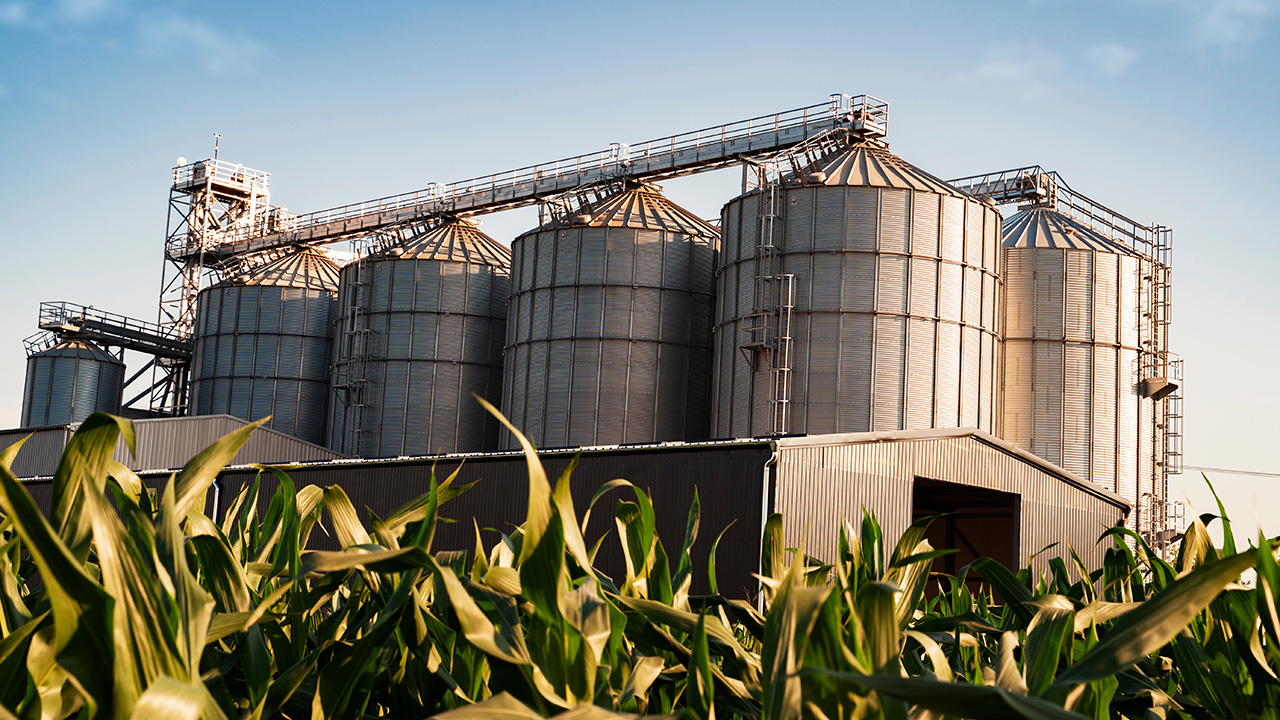
Grain stores
Expenditure on most plant and machinery (P&M) by a company qualifies for 100% relief in the year of expenditure via either the annual investment allowance (AIA) or full expensing (FE) (not second-hand assets). Following the announcement in the November Budget, there will be a new 40% first year allowance from 1 January 2026 on main pool assets that don’t qualify for the AIA or FE such as leased out assets. The main rate of capital allowances is reducing from 18% to 14% from 1 April 2026.
Generally, expenditure on buildings and structures do not qualify as plant and machinery for capital allowances purposes. They may qualify for structures and buildings allowances if the building was constructed after 29 October 2018 and used for the purposes of the company’s trade, but this relief is only at a rate of 3% per annum.
To be considered as P&M for capital allowance purposes, the asset must be used to perform a function within the trade rather than be part of the setting in which the trade is carried out.
The legislation specifically states that a silo used for temporary storage is plant and machinery.
In the case of Stephen May v HMRC, it was considered whether a grain store would qualify as P&M in its entirety. It was concluded that a grain store built specifically not only to store grain but to perform the function of preparing the grain for sale, such as drying, cooling and conditioning, is a silo for capital allowance purposes. HMRC agreed in this case the grain store met the condition to be temporary as it was used for nine months before emptying and cleaning ready for next season. The storage time was known when the grain store was constructed which demonstrates that it was always intended to be temporary storage.
Annual investment allowance
Companies can claim the annual investment allowance (AIA) to get 100% relief on up to £1m of capital expenditure on most plant and machinery per year. If a company has unused AIA for the year, they may want to consider accelerating the purchase of qualifying plant and machinery before the end of the accounting period to maximise this relief.
Double cab pickups
Historically, double cab pickups with a payload of one tonne or more were treated as vans for capital allowance and benefit in kind purposes. Insignificant private use would not generate a taxable benefit, and they would qualify for the AIA or FE in the year of purchase.
From 1 April 2025 the rules changed such that double cab pickups (even those with a payload of one tonne or more) are now treated as cars for income tax and corporation tax purposes (the VAT rules remain unchanged). They are taxed in the same way as company cars giving rise to a higher benefit in kind charge with employers Class 1A National Insurance payable. They no longer qualify for the AIA or FE with capital allowances being calculated based on CO2 emissions with a rate of 18% on a writing down basis (14% from 1 April 2026) or 6% if CO2 emissions are over 50g/km.
Given the significant tax implications of the new rules, HMRC have allowed businesses that have purchased, leased, or ordered a double cab pickup before 1 April 2025 to continue to follow the previous income tax treatment until the earlier of the vehicle’s disposal or 5 April 2029. However, this only applies when calculating the benefit charge. This means that any double cab pickup purchased after April 2025 may no longer qualify for Annual Investment Allowance or full expensing under capital allowances.
Therefore, it may now take years for full relief to be claimed making double cab pickups far less attractive for businesses.
If you have any questions about the above, or would like more information specific to your circumstances, please enter your email address below and we will get in touch:
Related View All



Our Accreditations and Memberships